
Guide
Day Porter vs. Nightly Janitorial Service
Some buildings need cleaning while people are in them, some need it after everyone has gone, and many need both. This guide helps property and facility managers from San Francisco to Roseville and Modesto decide where each service fits.
Two services built for different hours
A day porter is a cleaner assigned to your building while it is open. The porter walks a set route through lobbies, restrooms, breakrooms and common areas, handling whatever falls behind during a busy day: full bins, empty soap and towel dispensers, spills, smudged entry glass and meeting rooms left in disarray.
Nightly janitorial service is the full clean that happens once the building empties. Crews vacuum and mop, clean restrooms top to bottom, wipe desks and shared surfaces, empty every bin and reset each room for the next morning. The work is thorough because the rooms are empty and nobody has to step around it.
The simplest way to tell them apart is by purpose. A porter maintains the building during use, and the nightly crew restores it after use. One keeps a lobby presentable in mid-afternoon; the other makes sure it starts clean when the doors open the next day.
Buildings that run well on nightly service
An office with steady, predictable occupancy usually does fine with nightly visits alone. A professional suite in Campbell or an administrative office in Vacaville sees regular arrivals and a lunch break, but traffic rarely builds enough to overwhelm a restroom before the evening crew arrives.
Visit frequency carries the load here. A fully occupied office takes visits five nights a week, while a team that is in only three days a week gets visits on those days. Recurring janitorial service follows that pattern, and periodic work such as carpet extraction is booked on its own cycle.
Buildings that need a porter during the day
Public traffic is the signal. Think of a grocery or department store restroom during the holiday rush, a busy gym between evening classes, or a daycare entry at pickup time. Each one collects mess faster than a nightly visit can answer, and waiting until evening means visitors see the problem first.
Shopping centers show it clearly. Food court seating, common walkways and restrooms that serve every tenant’s customers need attention all afternoon, which is why retail center plans often pair nightly work with porter coverage on the busiest days.
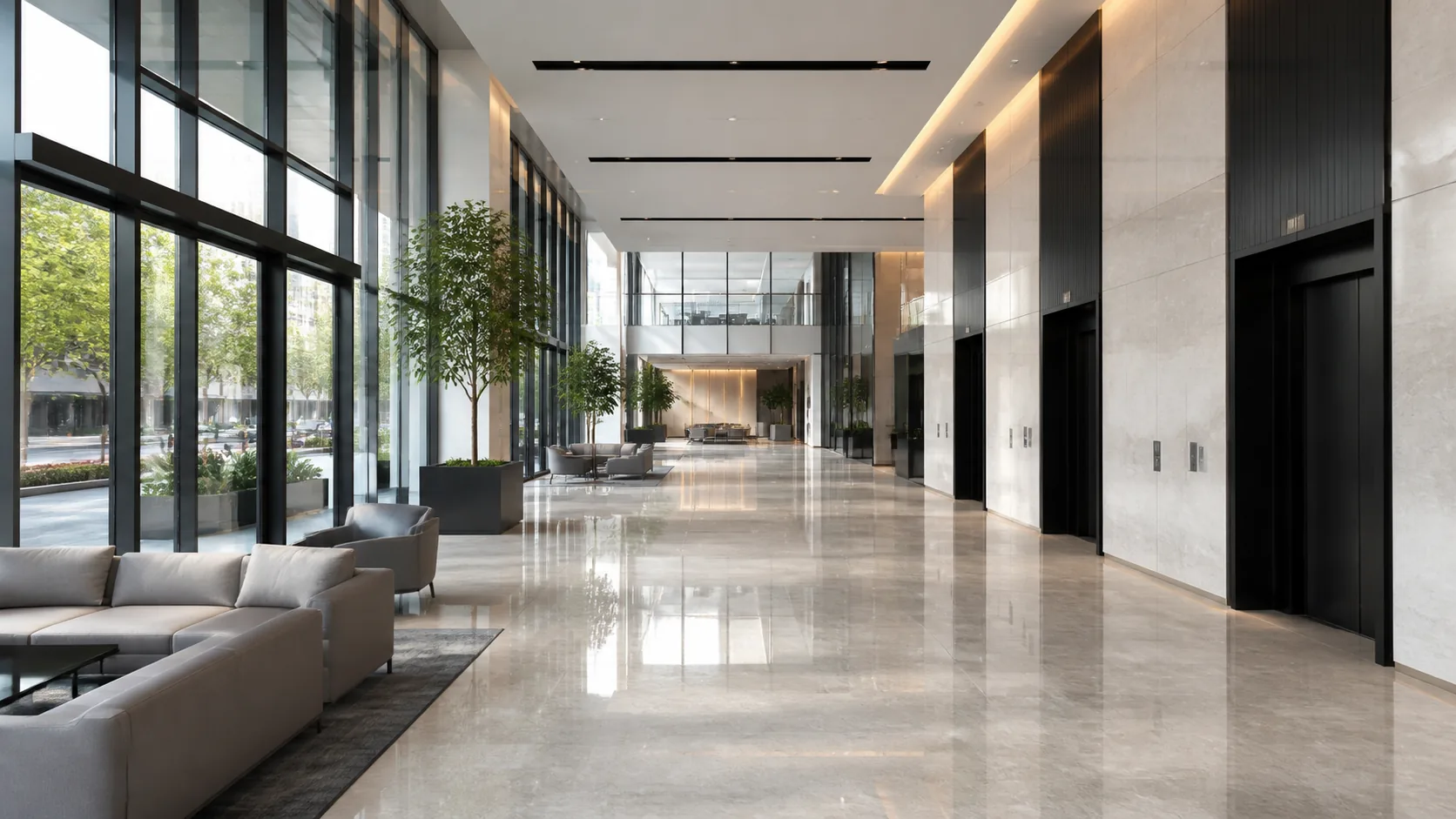
Multi-tenant towers sit in between. A busy San Francisco lobby with shared elevators and ground-floor restrooms can need a porter through the day, while the tenant suites upstairs are well served at night.
Working facilities have their own version of the problem, with breakrooms and restrooms taking a rush at every changeover; the guide to keeping support spaces clean around shift changes covers that pattern. Clinics feel it in the waiting room; see our guide to cleaning a medical office between patients.
How the two combine
In most busy buildings the answer is a pairing rather than a choice. The porter handles daytime upkeep and the nightly crew takes care of the full clean. Each has its own task list, so nothing is done twice and nothing falls between them.
The handoff is where the pairing pays off. A porter who spots a stained carpet runner or a restroom fixture that needs extra attention notes it, and the nightly crew deals with it that evening. Night porter visits extend the idea to buildings with late hours, covering touch-ups through evening classes or late store hours ahead of the main clean.
There is no need to commit to full-day coverage up front. A trial of one or two peak-hour rounds shows quickly whether restrooms and lobbies hold up, and the hours can grow from there.
Sizing the decision for your building
Use the table beside this section to pick a starting point, then check it on the ground. Walk the building at its busiest hour and again at closing: if restrooms and lobbies still look fine at five o’clock, nightly service is enough, and if they look worn by mid-afternoon, add day porter coverage for those hours.
Property managers with buildings in several cities can make that call building by building under one plan. Every quote includes an on-site walkthrough, the best moment to watch traffic and settle how many porter hours each building needs.
A few useful answers
Quick answers.
What work fills a day porter's shift?
A day porter keeps an occupied building in order, walking a route through restrooms, lobbies, breakrooms and common areas to restock supplies, empty bins, clean spills and reset rooms.
Which suits a small office better, a porter or nightly cleaning?
Nightly cleaning usually covers a small office with steady occupancy. A porter makes sense once restrooms or the lobby fall behind before the evening visit.
Can a building have both day porter and nightly janitorial service?
Yes. The porter covers daytime upkeep and the nightly crew does the full clean, each with its own task list.
Can porter hours change on busy days?
Yes. Coverage follows your busiest periods, such as holiday weekends at a retail center or lunch at a school, while the nightly schedule stays put.
Resources
Related guides
Services