
Guide
Medical Office Cleaning Between Patients
In a busy practice the waiting room changes hands all day, and the cleaning that happens between patients is day porter work. This guide explains how porter rounds, nightly janitorial service and your clinic’s own procedures fit together.
Two kinds of cleaning in one clinic day
A family practice in Concord or a specialty suite in Roseville sees a steady stream of people from the first appointment to the last. Chairs, the check-in counter, pens, door handles and the patient restroom are used again and again, and patients notice when any of them looks tired by mid-afternoon.
Two services share that load. During clinic hours, a day porter keeps the public side of the office fresh between patients. After the doors close, nightly janitorial service does the full clean that resets every room for the morning. Treating them as separate jobs, each with its own task list, keeps one from crowding the other.
Clinical rooms run on a third track. Exam and procedure rooms follow the practice’s own procedures for products, order and room status, whichever service is in the building.
What a day porter handles while patients are in
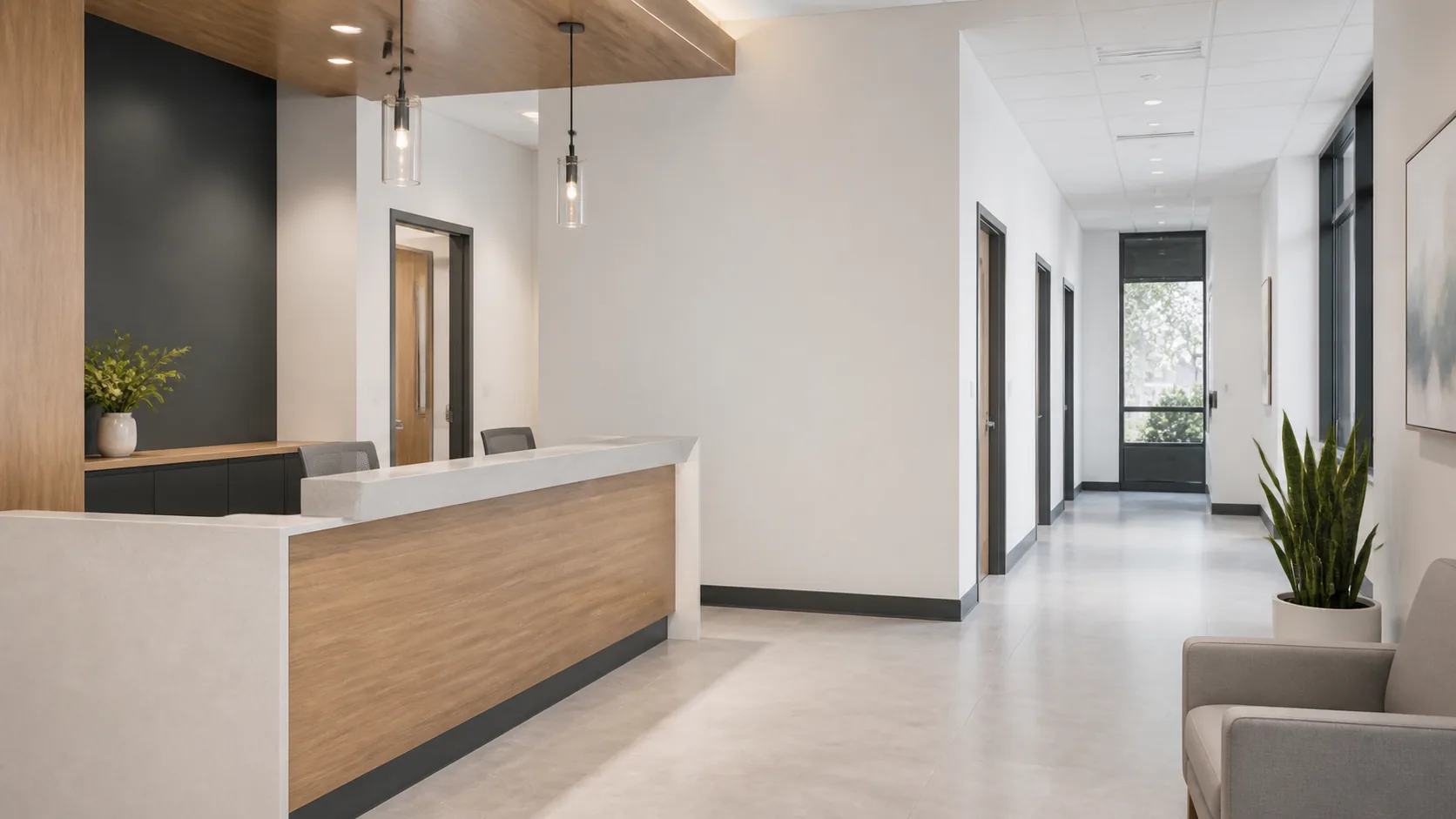
A porter works the parts of the office that patients see and touch. Rounds cover waiting room seating, the check-in counter, entry glass and door handles, elevator buttons in shared buildings, and the patient restroom, which is checked, wiped down and restocked through the day.
Timing matters more than volume. The heaviest moments in most practices come at the start of the morning block, right after lunch and during the late-afternoon rush, so day porter rounds are set around those peaks. A spill, rain tracked in at the entrance or a restroom out of paper towels gets handled on the spot instead of waiting for evening.
Porters work around the clinical workflow. Exam rooms are entered only when the practice’s procedure releases them, and rounds near the front desk fit between check-ins so staff are never crowded.
The nightly clean after the last appointment
Once the last patient leaves, nightly janitorial service takes over the whole suite. Waiting room carpet is vacuumed and hard floors mopped edge to edge, reception surfaces are cleaned, restrooms get a full clean rather than a touch-up, and staff areas such as the breakroom and private offices are reset the way our room-by-room office cleaning guide describes.
This is where the deeper work lives: baseboards, partitions, chair legs, trash and recycling throughout, and hallway floors that carry staff traffic all day. Recurring janitorial service sets how many nights a week this happens, matched to the days the practice sees patients.
Practices with evening appointments move the full clean to early morning, before the first patient arrives, so the suite still opens fresh.
Clinical areas follow the practice’s procedures
Exam and procedure rooms belong to the practice’s own procedures, and cleaning follows them exactly. Before service starts, the clinic sets which rooms cleaners may enter, which products are approved, the order rooms are done in, and how staff signal that a room is ready.
Night crews are trained in bloodborne-pathogen safety, wipe touch surfaces with EPA-registered disinfectants that sit wet for the label dwell time, and can add terminal cleaning of any room the practice books. Cleaners never read or move patient records, so charts and screens stay as staff left them.
Clear room status keeps both sides moving. A simple signal at the door, such as a card or a mark on the room schedule, tells the porter or the night cleaner which rooms are released and which are still in use.
When the practice keeps an approved product list, that list governs porter rounds and nightly visits alike, so the products used in the waiting room at noon match the ones used in the corridors after close.
Shared medical buildings and multiple clinics
Multi-practice buildings in Pleasanton, Roseville and Concord add a shared layer: the main lobby, the elevators and the restrooms off the corridor. Porter coverage for those spaces runs on the building’s schedule, while each practice keeps its own nightly frequency and room instructions.
Groups that run clinics in several cities can keep every office under one plan. Each clinic’s porter hours match its patient load, and the medical office cleaning plan carries each clinic’s procedures into its own visits.
Every quote starts with an on-site walkthrough, best held during clinic hours, which shows where patients wait, where restroom traffic builds and which rooms your procedures cover.
A few useful answers
Quick answers.
Who cleans the waiting room between patients?
A day porter does. Rounds through clinic hours cover seating, the check-in counter, door handles and the patient restroom, and the nightly visit handles the full clean after close.
How many porter hours does a small practice need?
Match coverage to the appointment peaks. A practice can start with rounds at the morning rush and right after lunch, then add hours if the waiting room stays busy later in the day.
How does the cleaner know an exam room is ready?
Your procedure sets the signal, such as a door card or a note on the room schedule. The porter or night cleaner works only the rooms the practice has released.
Can porter rounds and nightly cleaning use our approved products?
Yes. The approved list covers both services, so every visit uses the same products.
Services