
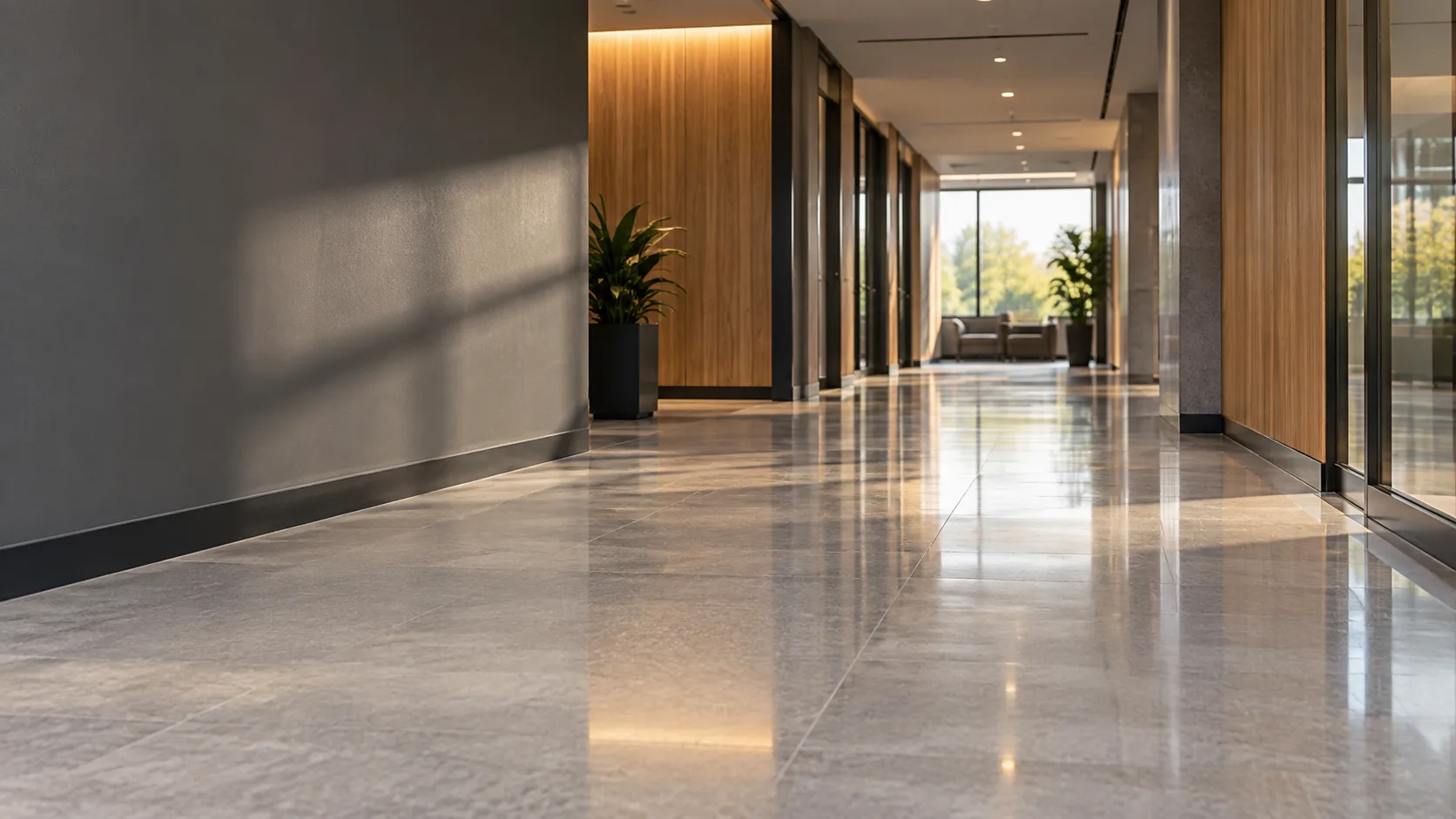
Commercial Floor Stripping and Waxing
Commercial floor stripping and waxing for VCT and resilient floors whose finish has worn thin or yellowed. Ascent Cleaning removes the old layers and lays down fresh coats for a deep, even shine.
Removing worn floor finish
Stripping removes old finish instead of simply cleaning the layer already on the floor. We check the floor first to confirm a strip is the right call.
When a recoat is enough
Not every dull floor needs a strip. If the finish is still sound, a scrub and recoat through commercial floor care brings it back for less.
Drying and return to use
New finish needs to cure before traffic returns, so the work is booked for evenings and weekends and the floor reopens once the last coat has set.
Timing the work
Stripping and waxing takes the floor out of use while the new finish dries, so it is usually planned for evenings or weekends. Corridors and entries are often done in sections so the building stays usable.
Between full strips, regular floor care keeps the finish in good condition for longer.
Signs a floor needs stripping rather than a recoat
Recoating works while there is still sound finish on the floor. Stripping becomes the right call when traffic lanes have worn through to bare tile, when old layers have turned dull or yellow and no longer respond to burnishing, or when finish has built up unevenly along edges and corners. Patchy color between busy paths and untouched areas is another clue.
A floor that is simply dirty or scuffed usually needs scrubbing instead. Knowing which problem you have before booking avoids removing finish that still has life in it.
How a stripping and waxing job runs
Work starts by clearing furniture and loose items from the area and closing it off. The old finish is loosened and removed, the floor is rinsed and allowed to dry, and new finish is applied in coats, with drying time between each. Once the last coat has cured, furniture goes back and the room reopens.
Large floors are divided into sections, so corridors in a school or aisles in a store are done across several nights while other areas stay open.
What to arrange on your side
Plan which rooms will be out of use and for how long, and ask staff to keep personal items off the floor. Identify furniture that is too heavy or delicate to move, and arrange access for the evening or weekend visit. Breaks suit this work at schools, and after-closing hours suit retail stores, so the school and retail cleaning schedules make a good starting point.
The first weeks after a strip
Fresh finish is at its softest in the first days after the work. Keeping heavy furniture on glides, putting walk-off mats back at the doors and holding off on aggressive scrubbing lets the coats harden fully. Daily dust mopping keeps grit from scratching the new surface while it settles.
After that, the floor joins the regular maintenance cycle described on our commercial floor care page, which is what pushes the next strip further away. Watch doorways and corridor turns, where finish wears first; that is where the next recoat should start.
What does floor stripping and waxing cost?
Stripping and waxing a 3,200-square-foot retail sales floor typically costs roughly $1,400 to $3,200. That reflects the usual rate of $0.44 to $1.00 per square foot in 2026 market data, lower in Central Valley cities and higher in San Francisco, while floors buried under many layers of old buildup can reach $3.00. Small rooms carry a minimum charge, so a full corridor costs less per foot.
Condition changes the math. A Vacaville school wing with 5,000 square feet of VCT that has been recoated for several seasons, with yellowed layers along the walls, needs extra stripping passes and lands at $0.85, or $4,250. The same wing stripped on a regular cycle comes off faster and prices lower.
Old finish thickness, the number of new coats, furniture to clear and replace, and whether the floor goes back in service the next morning all affect the price. Night and weekend work, rooms done in sections so the building stays open, and tile with damage or loose edges add time. Floors recoated before traffic lanes wear through to bare tile go longer between full strips, which keeps the long-run cost down. We look at the floor, check how worn the finish is, and price the strip, the coats and the timing in a quote.
A few useful answers
Frequently asked questions
Should every worn-looking floor be stripped?
No. Many dull floors only need a scrub and recoat. We check the finish first and only strip when it has worn through.
Can stripping and waxing be done in sections?
Yes. Areas can be done in stages so the rest of the building stays in use.
How soon can a newly waxed floor be walked on?
Once the final coat has dried and cured. The work is planned for evenings or weekends so that time passes while the building is closed.
What kinds of floors suit stripping and waxing?
Resilient tile and VCT-type floors. Concrete, stone and carpet get their own care through floor care and carpet cleaning.
Can stripping be scheduled during a school break?
Yes. Breaks and holidays are a common time for this work, since rooms stay closed while the finish cures.
Resources